



Trilobite fossil
Trilobes are arthropods of the phylum Arthropoda trilobes. The body is divided into three parts: head, chest and abdomen. There is a carapace on the back, and the carapace is divided into three longitudinal parts. The head is covered with a hard shell, called the cephalic nail; the central raised part of the cephalic nail is called the head saddle, and the shape and size of the head saddle vary greatly according to the type; the front of the head saddle is the head cap with eyes on it; the abdomen and tail are also wrapped in carapace. It is named for the longitudinal division of the carapace on the back into three pieces.

Cretaceous chrysanthemum fossils
The ammonites are an extinct marine mollusk belonging to the cephalopod family. They lived on Earth during the Mesozoic period, about 0.25 billion to 65 million years ago, and were mainly distributed in the oceans. The shape of the ammonite resembles a spiral flat disc, consisting of a series of spiral chambers. Their shells are usually made of calcareous matter and can be preserved as fossils. The size range of ammonites is large, from tiny species with only a few millimeters to giant species with a diameter of more than 2 meters.

Fossil skeleton of Procaratops
An's protoceratops is a herbivorous dinosaur of the ornithophorosaurid family, which is one of the most representative early horatosaurs in the late Cretaceous. The discovery of its fossils provides key evidence for the study of the evolution and paleoecology of the species, and is known as the "ancestor of the horned dragon". It is mainly found in the Late Cretaceous strata of South Gobi Province, Mongolia; a few fossils are found in Inner Mongolia, China. Inhabit arid to semi-arid grassland or desert environment, prefer low-lying, sparse vegetation area.

Late Cretaceous fish fossils
is a fish that lived in the Late Cretaceous and whose fossils are common in the Upper Cretaceous Upper chalk in the Kent region of England. Fossils of this fish are usually preserved in chalk rocks, which were formed in marine environments, especially those sediments rich in calcareous microfossils and mudcrystals. These fish fossils are of great significance for paleontologists to study ancient marine ecosystems and fish evolution. Not only does it provide us with information about the morphology and structure of this fish, it also helps scientists understand the paleoenvironmental conditions in which they lived. By studying these fossils, scientists can reconstruct ancient marine ecosystems

Ammonite fossil
It is an extinct marine cephalopod mollusk, belonging to the subclass ammonites, which lived from the Devonian to the end of the Cretaceous. It is known for its unique spiral shell, which usually presents complex patterns and designs, is made of calcium carbonate, and is divided into chambers separated by thin walls called partitions. The diameter of the ammonites varies from a few centimeters to more than two meters, and the shapes are varied, from tightly coiled forms to more open and loosely coiled forms. One of the most abundant and successful sea creatures of its time, it was an active predator, catching prey with its tentacles. The rapid evolution and wide distribution of ammonite make it an important standard fossil for stratigraphic division and correlation
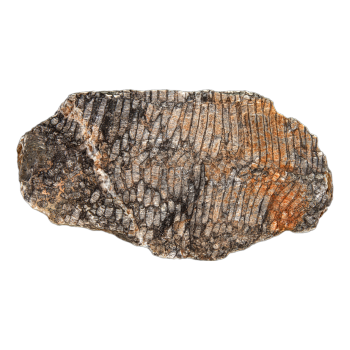
Silicified coral

Dinosaur skull fossil of Euphorbia
Halbersaurus, also known as Spiny Shield Ceratopsian, lived in the late Cretaceous period and is a type of herbivorous ceratopsian dinosaur. The neck shield halbersaurus had a large head and beautiful shield shaped circular decorations on its neck. Around the shield shaped ornament, there are six long horns of different sizes, which form the terrifying neck shield of the halberd dragon. This neck shield can not only scare the enemy. This neck shield usually looks spectacular and beautiful on strong and powerful males, but is not well-developed on females, so experts speculate that its main function is to showcase and attract the attention of the opposite sex. Because this neck shield looks very similar to a halberd in ancient Chinese weapons, it was named Jilong figuratively.

Titan python fossil
The Titan Python belongs to the Python family. Titan pythons lack external and middle ears, resulting in delayed hearing; The olfactory organ grows on the tongue; Without eyelids, one cannot close their eyes; There are lungs. The fossils of the Titan Python can be traced back to the Guajira Peninsula in northeastern Colombia, South America, approximately 60 to 58 million years ago. The Titan Python dominated the Earth for at least 10 million years. Titan pythons are cold-blooded animals with a habit of sunbathing and hunting after their bodies become warm. According to researchers' analysis, the food of the Titan Python includes blunt nosed crocodiles weighing half a ton, lungfish up to three meters long, and some large turtles.

Primitive bird fossils

Fossil of Trilobite with Round Shield
The round shield trilobite lived during the Devonian period and was mainly distributed in Morocco. The round shield trilobite is known for its unique appearance, with slender eye stalks, prominent spines, and a round, uneven head.

Gastropod shell fossils
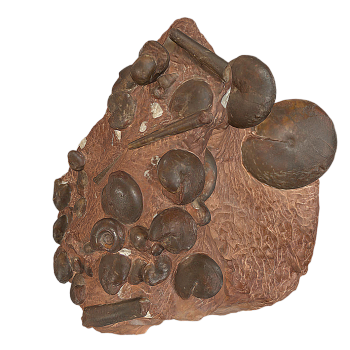
ammonite fossil
Kikushi, a collective term for cephalopods and ammonites in the phylum Mollusca, is a group of extinct marine organisms. Kikushi lived from the early Devonian to the late Cretaceous period, and its shell is often preserved in the form of fossils in the strata. The outer shell of ammonite is a single petal, consisting of three parts: the fetal shell, the gas shell, and the living room. It usually spirals around the fetal shell along a plane, with each revolution forming a spiral ring. Adult ammonite shells generally have 5 to 9 spiral rings, symmetrical on both sides, and can be straight, curved, or even irregular.

Fossil teeth of megalodon shark
It is an extinct giant shark, considered the largest shark in history and possibly the largest fish. Living during the Early Miocene to Pliocene period, approximately 23 to 2.6 million years ago. Fossil teeth are the main evidence for the existence of this ancient predator, and these teeth can grow up to 18 centimeters long, more than three times the size of modern great white shark teeth. It has a huge body size and a very strong biting force, making it the strongest known animal. The teeth are similar to modern great white sharks, with triangular, serrated edges and symmetry, but larger, thicker, more evenly spaced serrations, and a darker, V-shaped area near the root of the teeth.

Psittacosaurus mongoliensis
Mongolian parrot billed dragon is a kind of parrot billed dragon with regional characteristics found in the the Inner Mongolian Plateau, which belongs to the suborder ceratops, parrot billed dragon family, and parrot billed dragon genus. It has a small number of teeth on its skull, short forelimbs, long and strong hind limbs, walks on two legs, and feeds on plants.

Fossil of jawbone under horse

Allosaurus skeleton
Allosaurus is one of the most famous large carnivorous dinosaurs, occupying the top of the food chain in late Jurassic terrestrial ecosystems. Its model species, the fragile Allosaurus, was created by the great American paleontologist Osnil in the 20th century Marsh described the naming in 1877. They are also the most abundant and widely distributed predators discovered in the Late Jurassic period. Adult Allosaurus can grow up to 9 meters in length, with a few individuals believed to reach up to 12 meters. Although not as robust as the Tyrannosaurus rex, the body proportions of the Allosaurus are more symmetrical, with more developed forelimbs, making it appear more agile.

Abel Pinsdorf's Footprints
This is the name of a fossil footprint, a footprint fossil left by ancient animals.
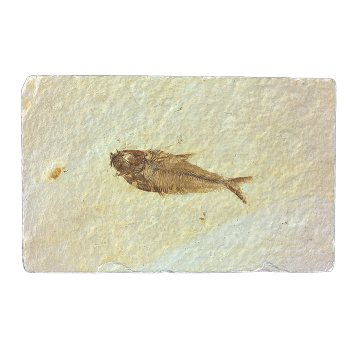
Fossil of ray finned fish
Ray finned fish, a major evolutionary branch of bony fish, is characterized by its fins being fan-shaped membranes supported by spoke shaped bony/keratinous spines, which differ from the paddle shaped fleshy fins supported by multi jointed appendicular bones in meat finned fish or by cartilage columns in cartilaginous fish.

Saber toothed tiger skeleton
The saber toothed tiger is a carnivorous mammal belonging to the genus saber toothed tiger in the order Felidae. The saber toothed tiger was once widely distributed on the continents of Asia, Europe, and America. It appeared in the Oligocene 35 million years ago and became extinct in the Pleistocene one million years ago. Their living period was during the Quaternary glacial period, when herbivores were slow-moving and easily hunted. But the ice age has ended, and cold resistant large herbivores cannot adapt to climate change and migrate northward, dying due to insufficient food. The saber toothed tiger lost its food source, did not have an advantage in hunting, and even became a prey for humans. In the end, it could only go extinct with the extinction of large thick skinned animals.

Juvenile Tyrannosaurus Rex skull
Tyrannosaurus rex, also known as Tyrannosaurus rex, is a type of theropod dinosaur and the most representative large theropod dinosaur. Tyrannosaurus rex once roamed an island continent called Laramidia (now located on the eastern foothills of the Rocky Mountains in western North America). The distribution range of tyrannosaurs is wider than other members of the tyrannosauridae family. Its fossils were discovered in various strata of the Late Cretaceous Maastrichtian stage (approximately 68 to 66 million years ago). Tyrannosaurus is the last known member of the Tyrannosauridae family before the Cretaceous Paleogene extinction event, and is also one of the latest non avian dinosaurs to go extinct. Tyrannosaurus rex is currently the heaviest known carnivorous dinosaur.

Fossil of true palm fin fish
The Eusthenopteron lived in the Devonian period 400 million years ago. It is a freshwater fish that feeds on aquatic animals.

Oyster reef fossils
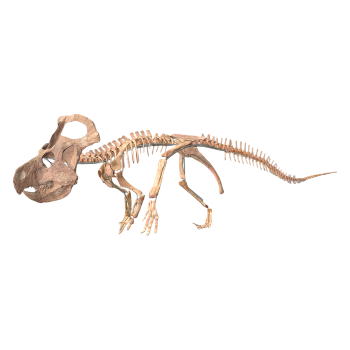
Ancestral ceratopsian skeleton
Anshihara ceratopsian is less than 3 meters long, with no horns on its head, small protrusions on its nose bone, and a neck shield; The mouth and nose resemble those of a parrot billed dinosaur, with teeth on the front of the mouth; Short limbs and obese body.

Trilobite Fossil
Trilobites are arthropods belonging to the order Tetraodontiformes in the phylum Arthropoda. The body is divided into three parts: head, chest, and abdomen; There is a carapace on the back, which is longitudinally divided into three pieces. The head is covered with a hard shell, called a cephalothorax; The central raised part of the head armor is called the head saddle, and the shape and size of the head saddle vary greatly depending on the type; The anterior part of the head saddle is the skull, on which there are eyes; There are also shells wrapped around the abdomen and tail. Named after the longitudinal division of the carapace on the back into three pieces. Widely distributed in ancient oceans, fossils are found on all continents today. I like to live in warm shallow sea areas and feed on algae, protozoa, and other organisms.

Popular Models
Honey Badger (3D animated model)
194 View
Guinea fowl (3D animated model)
165 View
Wild Goose (3D animated model)
187 View
Red Fox (3D animated model)
155 View
Random Model
Sun God pike (support 3D printing)
529 View



A sunflower
1053 View



Antique telephone in the twenties
590 View